 0
0
 0
0
www.twilightpoison.com – Wildfire ecology is not just a science on paper; it is a living, breathing lesson written across real landscapes. In Woods County, Oklahoma, that lesson will unfold in the pastures where eastern redcedar has taken root, reshaping grasslands and increasing fire risk. The upcoming Woods County Cedar Rodeo, hosted by OSU Extension, turns this challenge into a powerful learning lab for landowners, producers, and anyone curious about how fire, vegetation, and people interact.
This event focuses on practical wildfire ecology, showing how invasive eastern redcedar changes fuel loads, wildlife habitat, and ranch profitability. More important, it offers hands-on tactics to push those trees back, restore prairies, and reduce catastrophic fire potential. For many participants, the Cedar Rodeo will not just be another workshop; it will be a turning point in how they think about land stewardship in a fire-prone region.
Wildfire Ecology Meets Real-World Land Management
Wildfire ecology often appears abstract in textbooks, full of models, charts, and long-term datasets. At the Woods County Cedar Rodeo, though, the theory steps onto the pasture. Participants will see how eastern redcedar alters fuel continuity, moisture patterns, and fire behavior. Instead of reading about ladder fuels, they will walk among them, observing how dense cedar thickets can turn a routine grassfire into a dangerous crown fire. This direct exposure creates a deeper understanding of why management decisions truly matter.
The event also highlights how wildfire ecology connects to everyday economic realities. Eastern redcedar invasion reduces grass production, crowds out native species, and complicates livestock operations. When trees steal sunlight and soil moisture, ranchers lose forage. That translates to fewer grazing days or higher feed costs. By framing ecological principles through a financial lens, the Cedar Rodeo shows that good fire management is not just good science; it is sound business strategy.
From an ecological standpoint, the Cedar Rodeo underscores that fire is not simply a threat but a natural process. Plains ecosystems evolved with periodic burns, which kept woody plants in check and sustained open prairies. Without fire, eastern redcedar marches across the landscape, increasing both fuel loads and suppression expenses. Recognizing this history helps participants see prescribed burning not as an emergency tool, but as a planned, recurring practice aligned with core wildfire ecology principles.
Eastern Redcedar: From Background Tree to Fire Hazard
To appreciate the value of events like the Cedar Rodeo, one must first grasp how eastern redcedar moved from scattered native tree to aggressive invader. Fire suppression over the last century allowed seedlings to survive, grow, and spread. As these trees fill pastures, they create vertical fuel structures that connect ground fire to tree crowns. Wildfire ecology studies show that such ladder fuels rapidly escalate flame heights and heat output, overwhelming standard suppression efforts.
Beyond fire behavior, cedar encroachment alters water cycles and biodiversity. Dense stands intercept rainfall before it reaches soil, while deep roots draw down groundwater. Streams can shrink, and wet-weather springs turn unreliable. Wildlife that depends on open grasslands, such as quail or certain pollinators, lose critical habitat. In my view, failure to address cedar expansion is not just a fire issue; it is a slow erosion of entire prairie ecosystems, with cascading impacts on rural communities.
Wildfire ecology provides a framework for ranking management options. Cutting trees, shredding, herbicide, and prescribed fire each have strengths and limitations. Mechanical removal gives quick visual results but often proves costly at large scales. Fire can effectively control seedlings and small trees, especially when timed with specific fuel and weather conditions. The Cedar Rodeo creates space for producers to compare these methods in person, weigh trade-offs, and plan integrated approaches tailored to their own acreage.
Inside the Cedar Rodeo: A Hands-On Fire Classroom
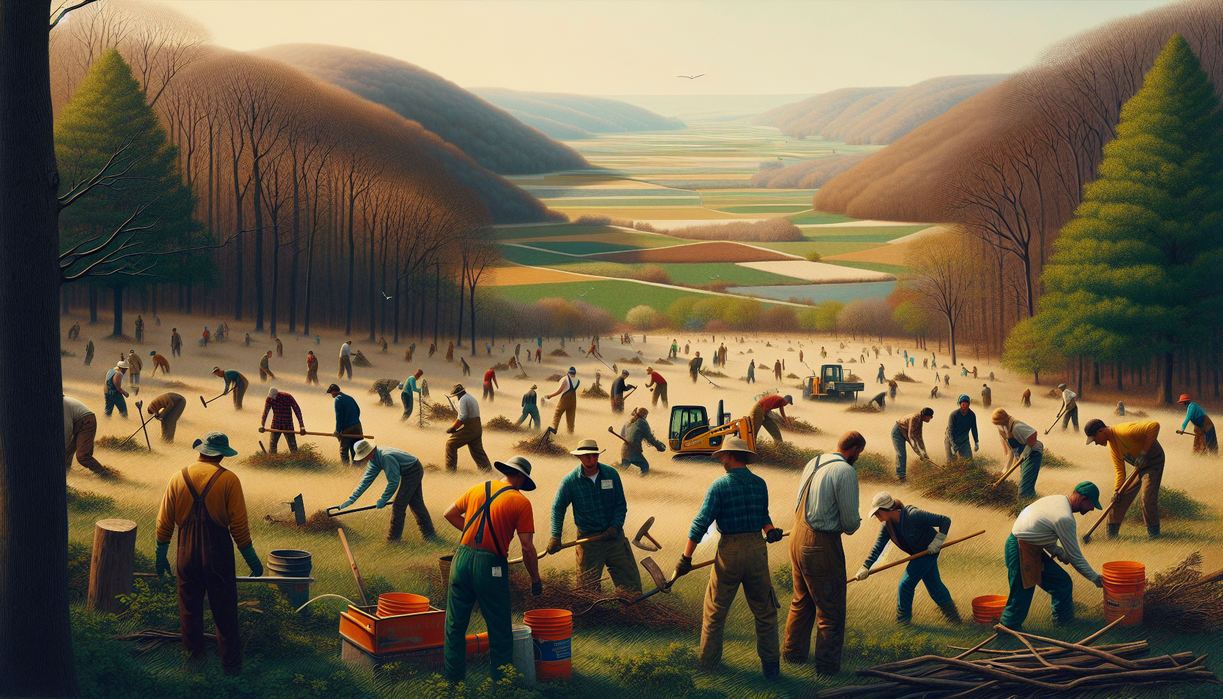
What makes the Woods County Cedar Rodeo especially valuable is its experiential format. Participants do not just sit through lectures on wildfire ecology; they step into the field where theory meets reality. Demonstrations may include safe ignition patterns, fuel assessment, and discussions on weather windows for prescribed burns. In my perspective, this style of education builds confidence, which is often the missing piece. Many landowners support the idea of fire but hesitate to apply it. When they watch trained crews operate, observe smoke behavior, and practice planning steps, fear gives way to respect and cautious competence. That shift is crucial if local communities hope to reclaim control over cedar-infested landscapes and reduce future wildfire disasters through proactive, science-informed management.
Prescribed Fire as a Strategic Tool
Prescribed fire functions as a cornerstone technique in modern wildfire ecology. Carefully planned burns help reset plant communities, mimic historic fire patterns, and keep cedar seedlings in check before they become problem trees. At the Cedar Rodeo, instructors can walk participants through key elements of a burn plan: objectives, fuel conditions, crew roles, contingency steps, and post-burn evaluation. This transparency demystifies a process that often seems intimidating from the outside.
Another benefit of prescribed fire, when aligned with wildfire ecology insights, is targeted timing. For example, burns executed at certain seasons can limit cedar while favoring native grasses that evolved with fire. Instead of a one-size-fits-all approach, producers learn to adjust frequency and intensity based on pasture history, rainfall patterns, and current fuel loads. Over time, repeated but well-managed burns stabilize ecosystems, reduce invasive pressure, and make any future wildfire less severe.
From my perspective, widespread acceptance of prescribed fire also carries a cultural dimension. Rural communities once treated burning as a routine land management practice, passed down through generations. Strict suppression policies and liability fears eroded that tradition. Events like the Cedar Rodeo help rebuild a shared understanding that fire, under the right conditions and oversight, protects more than it harms. By anchoring this message in wildfire ecology, OSU Extension blends tradition and science into a modern stewardship ethic.
Community Collaboration and Shared Responsibility
No single landowner can solve cedar encroachment or wildfire risk alone. Fire spreads across fences, ignoring property lines, which means effective wildfire ecology requires collaboration. The Cedar Rodeo serves as a meeting point for neighbors, agency staff, and fire professionals. They can discuss shared burn associations, equipment pools, and mutual-aid agreements. Such relationships matter when windows for safe burning are narrow, and help is needed on short notice.
Community-based approaches also address another challenge: smoke and perception. Some residents worry about visibility, health effects, or escape risk from prescribed fires nearby. Transparent education rooted in wildfire ecology helps explain how burns are planned, which weather patterns reduce smoke impacts, and what safety margins crews maintain. When neighbors understand the science and precautions, opposition often softens into cautious support or even enthusiasm.
Personally, I see this cooperative model as the only realistic path forward in many fire-prone regions. Climate variability, longer fire seasons, and expanding woody cover create a complex risk profile. Individual strategies, such as clearing one small pasture, offer limited protection if surrounding lands remain overloaded with cedars. Collective action, guided by strong wildfire ecology knowledge and shared goals, transforms isolated efforts into a resilient regional strategy.
Why Events Like the Cedar Rodeo Matter Now
Standing at the intersection of research, practice, and community, the Woods County Cedar Rodeo represents more than a single workshop. It is a signal that wildfire ecology is moving from academic journals into everyday decision-making. As eastern redcedar continues to spread across the Great Plains, the cost of inaction rises: more intense wildfires, degraded water resources, lost habitat, and stressed rural economies. By offering clear instruction, on-the-ground demonstrations, and a space for conversation, this event empowers landowners to act while options remain flexible. In a world facing hotter summers and shifting rainfall, proactive fire management is not optional; it is a responsibility to both land and neighbors.
Looking Ahead: Learning From Fire to Shape the Future
When participants leave the Cedar Rodeo, their most valuable takeaway may be a changed mindset. Wildfire ecology teaches that landscapes respond over decades, not days. One burn or one cutting project will not solve cedar encroachment on its own. Instead, long-term planning, consistent monitoring, and adaptive strategies become crucial. Land stewards who embrace this perspective start to view each season as a chance to nudge the ecosystem toward healthier, safer conditions.
I also believe this type of education strengthens local resilience against extreme events. When communities understand how fuel loads, weather, and ignition sources interact, they can prepare more effectively. That includes not just pasture management, but also home hardening, emergency planning, and coordination with local fire departments. Wildfire ecology provides the language to connect these pieces into one coherent risk-reduction strategy rather than a patchwork of reactive measures.
Ultimately, the Cedar Rodeo reminds us that fire will always play a role in prairie landscapes. The real question is whether it arrives on our terms or as an uncontrolled disaster. By investing time in events that fuse science, tradition, and hands-on learning, landowners choose the former. They commit to guiding fire instead of merely fearing it. That choice carries a quiet but profound hope: that with knowledge, cooperation, and respect for wildfire ecology, we can restore prairies, protect livelihoods, and leave more resilient land for the next generation.